
Agentic AI is breaking the assumptions legacy databases were built on. One user action now triggers thousands of agent instances. Context has to branch per agent in milliseconds. Vectors, transactions, and analytics need to live in the same place. Fragile multi-database stacks cannot keep up, and the engineering teams holding them together are paying the cost in reliability, operational overhead, and time to market.
It is time to rethink the database layer for how software actually gets built now.

Join us at TiDB SCaiLE Europe 2026, the premier European event for teams building the data infrastructure behind agentic AI. Come see what becomes possible when the database is built for agent behavior, not retrofitted for it.

Thursday, 4th June, 2026

09:00 AM – 07:30 PM

Epicenter Stockholm

What to Expect?

Real-World Success Stories

Hear from customers and users who have harnessed the power of TiDB to drive business growth and innovation

Expert Led Deep Dives

Explore strategies for scaling your data infrastructure to meet tomorrow’s demands while accelerating AI app builds and time-to-market

Networking Opportunities

Connect with TiDB users, engineers, and peers to build relationships and learn from their experiences

Who Should Attend?
  • Developers and engineers building applications on distributed or cloud-native databases
  • Data and platform architects designing infrastructure for scale and resilience
  • Engineering leaders evaluating modern data strategies for AI-native workloads
  • Technical decision-makers exploring alternatives to legacy database infrastructure

Built Something Worth Sharing?

Share your ideas with a global audience of engineers and data leaders at TiDB ScaIL Europe 2026. Submit your proposal by May 18th.

Agenda
10:00 am - 11:00 am
Keynote: Welcome to the Age of Autonomous Systems
Ed Huang
Ed Huang
CTO, TiDB
Software is no longer just an application. It's becoming an autonomous system that plans, executes, collaborates, and improves on its own. As agentic AI advances, the way we write software, use it, and design the infrastructure beneath it is being rebuilt from the ground up. In this keynote, Ed examines why coding itself is being automated, what software looks like when agents are its primary users, and why today's cloud and infrastructure stack was never built for any of this. The next decade of computing won't be a refinement of the last. It will be a new world. The question is what we build first.
11:00 am - 11:30 am
TiDB in Practice: Scaling Databases Without Losing Sleep
Tarmo-Kople
Tarmo Kople
IT Infrastructure Architect, LHV Bank
Many teams discover TiDB through its promises of scalability and HTAP. But real-world adoption takes more than a strong benchmark or a catchy acronym. In this session, Tarmo Kople, IT Infrastructure Architect at LHV Bank (and formerly Bolt’s DB Team Lead), shares his journey deploying and evaluating TiDB across two very different organizations: from high-growth startups to regulated banking environments.
11:30 am - 12:00 pm
Breaking Up with MySQL: How Bolt Rebuilt for 100 Million Users on TiDB
Leandro-Morgado_circle
Leandro Morgado
Senior Database Reliability Engineer, Bolt
Bolt grew 400% post-pandemic to become Europe's fastest-growing mobility company, serving 100 million users across 500+ cities. But their MySQL infrastructure couldn't keep up. Adding a single column to a loaded 1TB table took up to a week, and managing hundreds of schemas across thousands of microservices had become an operational nightmare. In this session, Bolt's database reliability team shares how they evaluated alternatives, why TiDB's MySQL compatibility and horizontal scalability won the decision, and how they migrated their most critical workloads to seven TiDB clusters on AWS while achieving 3:1 data compression and five-nines reliability in production.
12:00 pm - 1:00 pm
Lunch
1:00 pm - 1:30 pm
Vector Search Meets Distributed SQL: Why Agentic AI Doesn't Need Another Database
Mattias Jonsson
Mattias Jonsson
Principal Software Engineer, TiDB
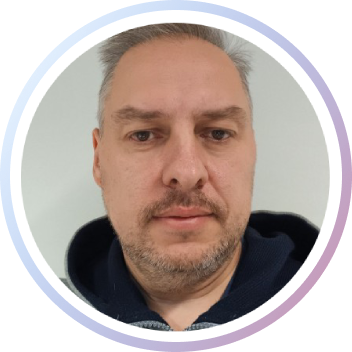
Most agentic AI architectures bolt a vector database onto an existing stack, adding another system to manage, another sync pipeline to maintain, and another failure point to monitor. But what if your SQL database already spoke vectors natively? In this session, Mattias Jonsson explores how built-in vector search and AI-native capabilities in distributed SQL eliminate the need for a separate vector database. The session covers how vector embeddings, semantic search, and agent memory patterns work alongside transactional and analytical workloads in a single query layer, what that means for developers building agentic applications today, and where the convergence of SQL and vector is headed next.
1:30 pm - 2:00 pm
Migrating from MySQL to Distributed SQL: What Changes, What Doesn't, and What Breaks
Daniel-bio
Daniël van Eeden
Technical Solutions Engineer, TiDB
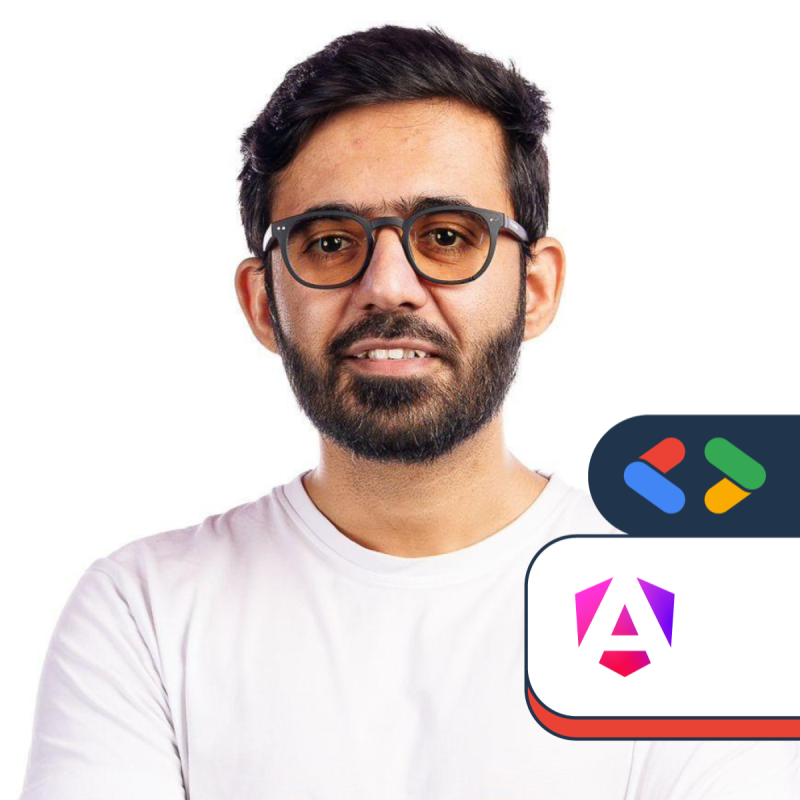
Most teams evaluating distributed SQL start with one question: How compatible is it with what we already run? The answer is more nuanced than any compatibility matrix suggests. This session digs into what actually happens when MySQL workloads move to distributed SQL: the queries that run identically, the assumptions that quietly break, the transaction semantics that shift, and the Raft consensus and LSM tree internals that explain why. Drawing from real-world production migrations across Europe, Daniel van Eeden uncovers the patterns that transfer cleanly, the gotchas that don't surface until production, and the framework you need to evaluate what your workloads actually require.
2:00 pm - 2:15 pm
Break
2:15 pm - 2:45 pm
The Memory Wall: Why AI Agents Fail (and how to fix them)
Bernard_circle
Bernard Kavanagh
Principal Solutions Architect, TiDB
Today's AI agents run on duct tape: separate systems for transactions, analytics, and vectors, stitched together with brittle ETL pipelines and growing engineering overhead. That approach won't survive the next wave of agentic AI, where enterprises need to support millions of concurrent agents, each with persistent memory, real-time data access, and consistent state. This session introduces the architecture that supports millions of agents: a converged distributed SQL platform that unifies OLTP, real-time analytics, and native vector search in a single ACID-compliant system, handling relational, vector, and full-text demands in one query layer. We'll walk through the Decide-Validate-Remember loop that production teams use to reduce token costs through persistent context and scale multi-agent workflows without state drift.
2:45 pm - 3:15 pm
Agentic Streaming Decisions: Unlocking Real-Time AI with Ververica and TiDB
alex_campos_circle
Alex Campos
Technical Sales Professional, Ververica
Agents need more than an LLM to operate in production. They need fresh data, trusted context, durable memory, and the ability to act the moment business events happen. In this session, we will show how Ververica and TiDB work together to power real-time AI applications. Ververica, powered by Apache Flink, continuously processes live events, computes signals, and triggers decisions, all at the speed of light. TiDB provides the operational, analytical, and vector-aware data layer for context, retrieval, and agent memory. Attendees will learn how to build new streaming analytics capabilities while leveraging the current enterprise data ecosystem and infrastructure.
3:15 pm - 3:30 pm
Break
3:30 pm - 4:00 pm
To Be Announced
4:00 pm - 4:30 pm
When EXPLAIN Isn't Enough: Visualising Vector Search for Engineering and Product Teams
Photo2_circle
Simon Hearne
Founding Solutions Architect, Zilliz
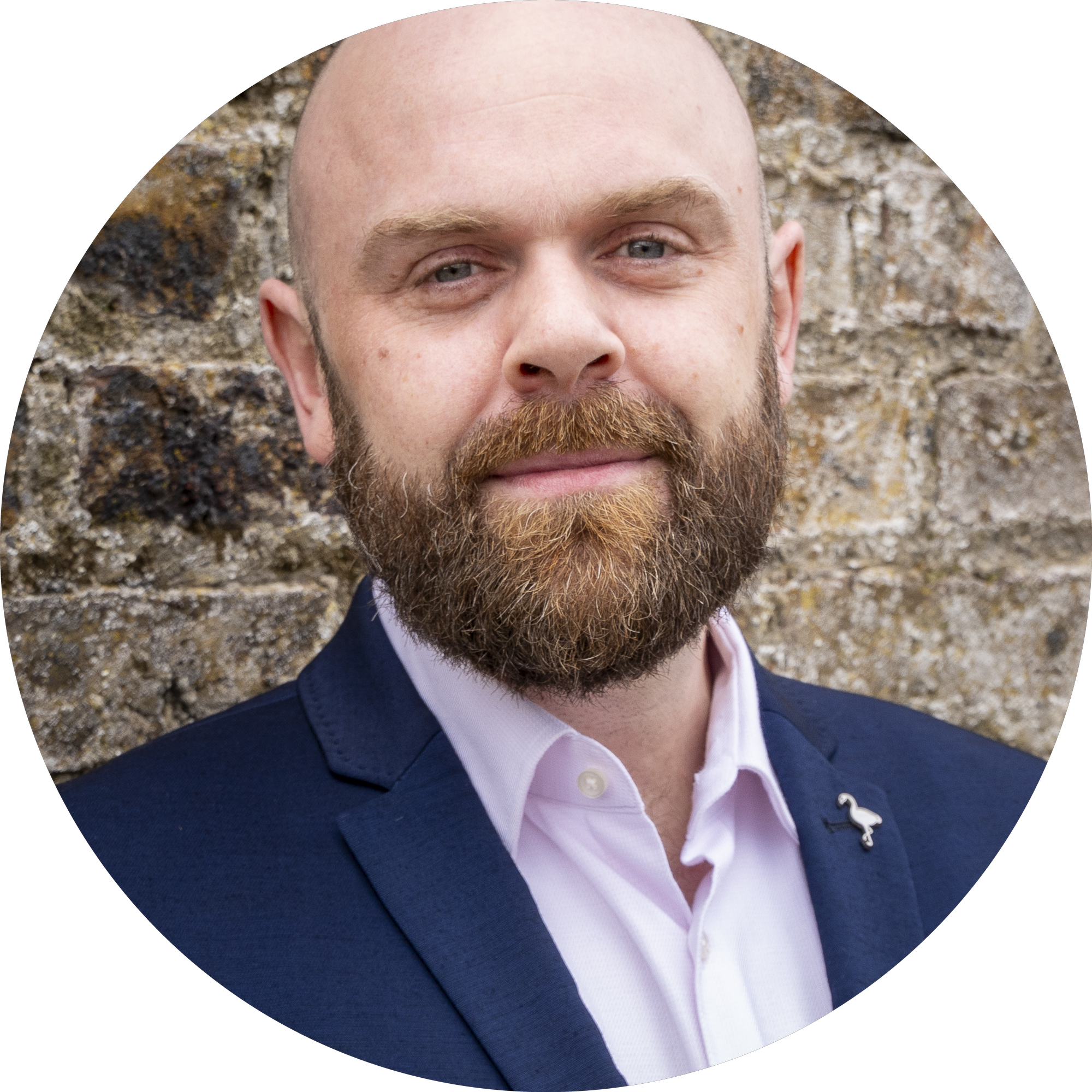
SQL makes sense. But when it breaks, you reach for EXPLAIN. Vector search offers no such comfort. Multi-thousand-dimension embeddings, approximate nearest-neighbour indexes, and quantisation tradeoffs make it hard to know what your system is doing, and harder still to diagnose when results quietly degrade. Through interactive visualisations, Simon Hearne shows what embeddings look like in high-dimensional space, what quantisation does to your recall, and how to catch retrieval failures before your agents do. You'll leave with a sharper mental model and a diagnostic toolkit for the production problems hardest to see.
4:30 pm - 4:45 pm
Break
4:45 pm - 5:30 pm
Panel/Fireside Chat
5:30 pm to 7:30 pm
Networking and Happy Hour